

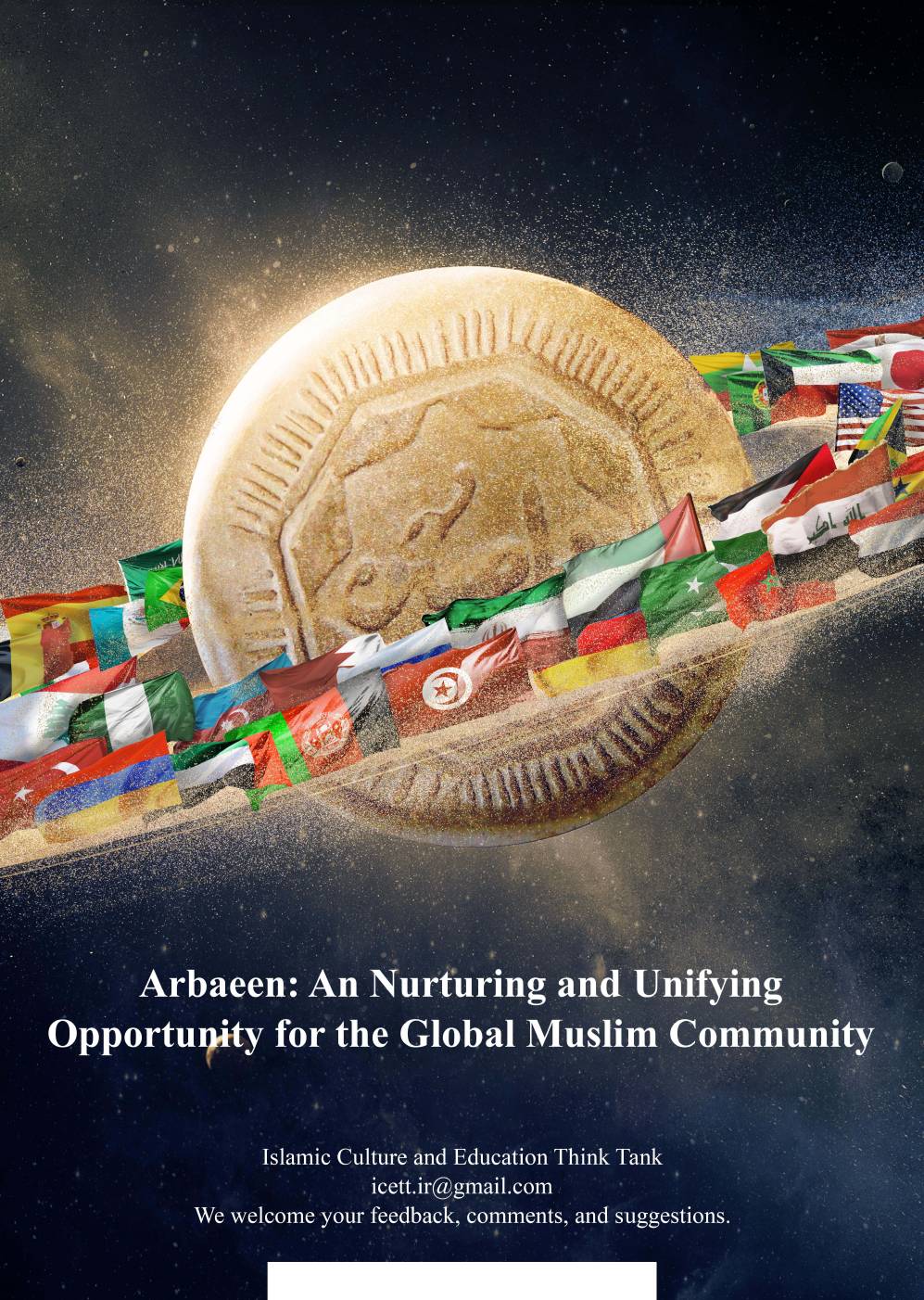
Arbaeen: An Educational and Unifying Opportunity for the Global Muslim Community
In the Name of God, the Most Compassionate, the Most Merciful
Arbaeen: An Educational and Unifying Opportunity for the Global Muslim Community
Preface
Following a specialized session held by the Islamic Culture and Education Think Tank in Iran, this note has been prepared to highlight the unique potential of the Arbaeen pilgrimage in strengthening family and school education. It is hoped that this analysis will serve as a valuable resource for reflection and planning for Muslims worldwide, and help maximize the benefits of this great spiritual event.
Arbaeen: A Path Towards Educational Perfection and Global Unity
As the luminous days of Arbaeen al-Hussaini approach, an exceptional opportunity arises to reflect on the remarkable and unparalleled phenomenon of the Arbaeen walk. Rooted in deep history, this sacred procession was once undertaken by few, and often under great hardship. Today, by the grace of God Almighty and through the blessing of the martyrs’ sacrifice, it has transformed into a gathering of millions.
Despite attempts by some media outlets to ignore or downplay it, Arbaeen has established itself as a global event—an important step toward worldwide recognition of Imam Hussein (peace be upon him) and a movement toward the “Day of Salvation” and the advent of Imam Mahdi (may Allah hasten his reappearance). Imam Mahdi will introduce himself through his grandfather, the Master of Martyrs, and this vast gathering reflects the world’s readiness for that recognition.
Arbaeen: A Unique Training for Self-Improvement and Readiness for the Imam
The Arbaeen pilgrimage is among the most powerful educational experiences for countering the challenges of the modern era—challenges shaped by satellite media, the internet, and virtual spaces that influence today’s youth. Above all, Arbaeen is a “spiritual exercise” and a “journey of migration”—a migration that involves leaving behind comfort and convenience to pursue a higher goal.
Its defining feature is moving “towards the Imam.” This journey serves as a practical training ground for sacrifice, empathy, and recognizing the Imam. Along the path, individuals prepare themselves for the “decisive day” when duty calls. Contrary to the assumptions of some critics who reduce it to an event for food and rest, the pilgrimage involves real hardship—hardship that builds resilience and character. Just as an athlete must train rigorously to achieve excellence, spiritual strength also requires consistent effort and discipline.
The Role of the Family in Making Arbaeen a Lasting Educational Experience
Families can transform Arbaeen into an enduring and impactful educational opportunity for their children. However, participation should not be imposed under all circumstances—such as when extreme weather or other factors make travel impractical. Every family’s situation is unique. For those with favorable conditions, the following is recommended:
Before the Journey:
- Instill Value: Help children and teenagers appreciate the significance of the pilgrimage.
- Encourage Active Involvement: Place a contribution box at home and invite all family members to save for the journey, keeping the event in mind for months in advance.
- Create a Spiritual Atmosphere: Host or attend monthly mourning gatherings, involving children in tasks such as serving tea, cleaning, or putting up banners.
- Physical Preparation: Organize regular family walks or mountain hikes to build stamina, while strengthening family bonds.
- Daily Spiritual Practices: Recite Ziyarat Ashura together for 10 to 40 days before the journey, adding recreational elements to keep it engaging.
During the Journey:
- Stay Focused on the Purpose: Remember that the goal is pilgrimage, not simply enjoying food or rest at service stations.
- Observe Travel Etiquette: In cities like Najaf and especially Karbala, follow proper conduct, including avoiding certain foods discouraged in narrations.
- Involve Children Actively: Explain customs and ensure children participate meaningfully rather than remaining absorbed in mobile devices.
After the Journey:
- Maintain Spiritual Gains: The greatest challenge is preserving the pilgrimage’s spiritual benefits in daily life.
- Continue Good Practices: Keep hosting mourning gatherings, performing acts of charity, and assisting the needy to sustain the spirit of sacrifice.
Experience shows that, despite challenges such as visa delays, transport issues, border waits, or even temporary loss of a child, the blessings of Arbaeen far outweigh the hardships. In fact, such challenges often contribute to children’s personal growth and deepen the educational impact of the journey.
The Proactive Role of Muslims in Engaging Educational Systems and Policymakers
Schools and educational systems should make greater use of Arbaeen’s transformative potential. Moral advice alone is insufficient for today’s youth. Even a brief three- or four-day presence along the route can spark profound change.
Muslims worldwide should expect and request that policymakers, governments, and ministries of education:
- Provide necessary infrastructure such as dedicated buses and affordable flights for students.
- Institutionalize the pilgrimage as a regular educational program rather than merely an extracurricular activity.
- Include the subject of Arbaeen in school curricula and textbooks.
- Hold competitions throughout the year, awarding winners with the opportunity to attend the pilgrimage.
It must be remembered, however, that Arbaeen has thrived primarily through the will and initiative of the people. If it were solely organized by governments, participation might not have reached its current scale. Therefore, each person should contribute—according to their abilities—to organizing and promoting this great movement.
Arbaeen in the Era of the New World Order: A Mission for Unity and Resistance
In a time of shifting global dynamics and deliberate attempts by some powers to sow division, Arbaeen stands as a powerful symbol of the unity of the Islamic Ummah. Transcending sectarian and ethnic boundaries, it provides a living model of solidarity, where Muslims of all backgrounds gather in love for Imam Hussein (peace be upon him).
This unity not only strengthens internal cohesion but also offers a compelling counter-narrative to prevailing media portrayals of Islam as violent or extremist. Images of millions walking together in peace and mutual respect provide a strikingly different reality. Arbaeen is also a platform for cultural exchange and global dialogue. The message of Ashura—justice and opposition to oppression—has crossed religious and national boundaries, attracting followers of other faiths and even those with no religious affiliation.
In this light, the struggle of the Palestinian people and the steadfastness of Gaza are contemporary manifestations of the timeless battle between truth and falsehood, of which Imam Hussein (peace be upon him) was the flagbearer. Arbaeen can amplify the voice of Gaza’s suffering, using media and public engagement to make the cry for justice heard worldwide. This potential must be harnessed to expose oppression and stand with the oppressed, demonstrating that Arbaeen is not merely a historical commemoration but an enduring movement against injustice in every era.
It is hoped that by recognizing the vast capacities of the Arbaeen pilgrimage, Muslims everywhere will use this sacred occasion to its fullest—promoting spiritual growth for individuals and communities, inspiring future generations, and raising the banner of pure Islam ever higher across the globe.
Islamic Culture and Education Think Tank
📧 icett.ir@gmail.com
We welcome your feedback, comments, and suggestions.




 09905444316
 www.icett.ir@gmail.com
 ایران، تهران، بزرگراه شهید چمران، پل مدیریت، دانشگاه امام صادق علیه السلام


دیدگاهتان را بنویسید